Growing older often brings valuable independence and familiar routines that many older adults wish to preserve.
However, there comes a point when remaining at home without adequate support can present serious risks. For families concerned about an elderly parent living alone in West Sussex, recognising the early warning signs can help prevent accidents, health complications, and unnecessary distress.
At Homelands Nursing Home, we understand the challenges families face when making decisions about elderly care in West Sussex. Identifying changes in physical health, memory, mobility, and daily living abilities allows families to provide the right level of support while protecting dignity and quality of life.
Identifying changes in physical health, memory, mobility, and daily living abilities allows families to provide the right level of support while protecting dignity and quality of life.
Many families ask when an elderly parent should move into a care home or how to know if an elderly parent needs care.
Although every individual is different, declining independence often develops gradually. Small changes that may initially seem insignificant can eventually affect safety, wellbeing, and overall health.
By recognising these warning signs early, families can make informed decisions about residential care in West Sussex and ensure their loved ones receive appropriate support.
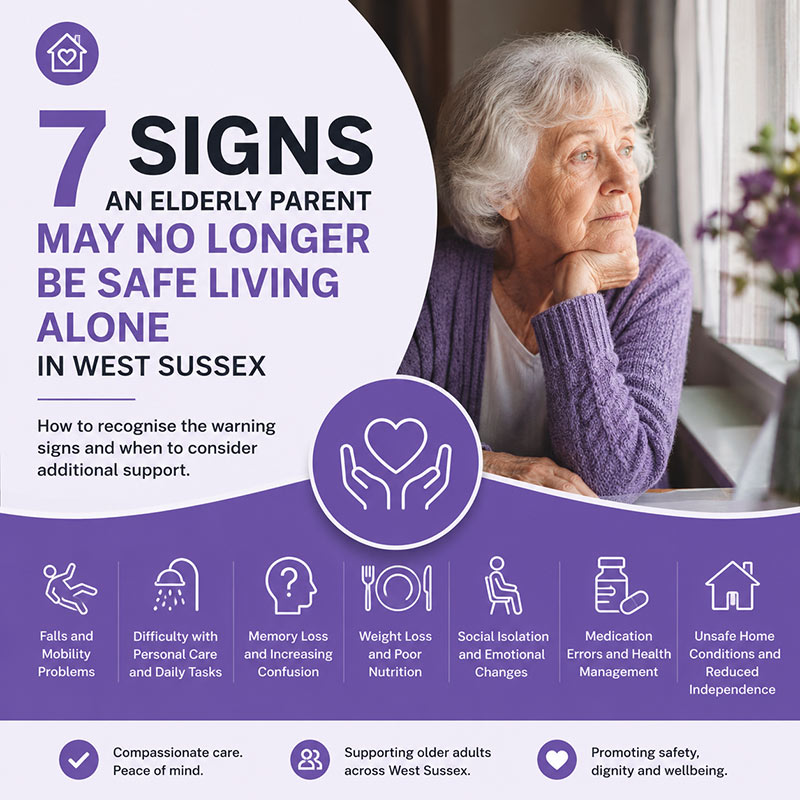
One of the most important signs an elderly parent should not live alone is a noticeable decline in mobility.
Older adults who experience:
. Frequent falls
. Difficulty walking safely
. Trouble climbing stairs
. Reduced balance
. Weakness or frailty
may face an increased risk of serious injuries.
Even minor falls can lead to fractures, hospital admissions, and a loss of confidence. Some older adults become afraid of moving around independently, which can contribute to isolation and declining physical health.
Families caring for ageing parents in West Sussex should pay close attention to bruises, unexplained injuries, or stories about losing balance. These may indicate that senior safety at home is becoming compromised.
Professional elderly parent support can provide a safer environment with assistance available whenever required.
Maintaining personal care and household responsibilities becomes increasingly difficult as independence declines.
Warning signs elderly parents need more support may include:
. Wearing the same clothes repeatedly
. Neglecting bathing or grooming
. Unwashed laundry piling up
. Household clutter becoming excessive
. Dirty dishes accumulating
. Difficulty preparing meals
Changes in appearance and home cleanliness often indicate that daily routines have become overwhelming.
As part of quality elderly wellbeing, maintaining dignity and personal care is essential. Families may notice unpleasant odours, poor hygiene, or signs that household tasks are no longer being managed safely.
When these challenges begin affecting health and comfort, additional support or a trusted nursing home in West Sussex may offer the reassurance families need.
Although occasional forgetfulness is normal, persistent confusion may indicate that living alone is no longer safe.
Common concerns include:
. Missing medication doses
. Forgetting appointments
. Repeating conversations
. Leaving appliances switched on
. Becoming disoriented
. Difficulty managing finances
. Wandering or getting lost
These signs of declining independence in older adults can place them at significant risk.
Families often ask how to know if an elderly parent needs care when memory problems begin affecting daily life. The answer lies in recognising whether those changes interfere with safety, nutrition, medication management, and overall wellbeing.
Providing compassionate and structured care can help maintain confidence and improve quality of life.
An elderly parent living alone in West Sussex may struggle with:
. Shopping independently
. Preparing balanced meals
. Remembering to eat
. Maintaining hydration
. Managing dietary requirements
Unexpected weight loss is one of the clearest signs elderly parents need help.
Families may discover:
. Expired food in cupboards
. Empty refrigerators
. Reduced appetite
. Dehydration
. Increasing weakness
Poor nutrition can contribute to falls, infections, confusion, and reduced mobility.
Ensuring access to regular meals and nutritional support forms an important part of comprehensive elderly care advice in West Sussex.
Older adults living alone sometimes experience:
. Withdrawal from hobbies
. Loss of interest in activities
. Depression
. Anxiety
. Reduced confidence
. Lack of motivation
. Increased feelings of loneliness
These emotional changes can gradually affect appetite, sleep, and overall health.
Families concerned about care for ageing parents should consider whether their loved one is maintaining meaningful social connections.
Companionship and community engagement are vital components of elderly wellbeing. Maintaining friendships, participating in activities, and enjoying regular interaction all contribute to improved happiness and emotional resilience.
A supportive environment can help older adults remain active and connected while reducing feelings of isolation.
Read our blog on Recognising Depression and Anxiety in Elderly Loved Ones
Warning signs elderly parents need more support may include:
. Missed prescriptions
. Taking incorrect doses
. Confusion about medication schedules
. Unmanaged medical conditions
. Frequent hospital visits
. Repeated infections
Medication errors can have serious consequences and may lead to worsening health or emergency admissions.
Families should also consider whether their loved one:
. Attends medical appointments independently
. Understands treatment plans
. Recognises symptoms requiring medical attention
. Can respond appropriately during emergencies
Professional support ensures medications are managed safely while promoting better long-term health outcomes.
Common concerns include:
. Burn marks from cooking accidents
. Forgotten kettles or appliances
. Unpaid bills
. Hoarding behaviour
. Difficulty using telephones
. Neglected repairs
. Lack of heating during winter
. Trouble answering doors
These issues often indicate that independent living is becoming increasingly difficult.
When considering when it is unsafe for elderly parents to live alone, the overall ability to manage everyday responsibilities should be carefully assessed.
Safety concerns should never be ignored, particularly when they affect health, finances, or emergency preparedness.
Recognising multiple warning signs together often provides the clearest indication that additional support is needed.
Families should consider:
. Has mobility declined?
. Are memory problems worsening?
. Is nutrition suffering?
. Has personal hygiene changed?
. Is loneliness becoming more evident?
. Are medications being managed correctly?
. Are there increasing safety risks at home?
Answering these questions honestly helps determine whether home support remains appropriate or whether alternative residential care options in West Sussex should be explored.
The decision to move into a care home is deeply personal. However, delaying support until a crisis occurs often increases stress for everyone involved.
A move may become appropriate when:
. Safety can no longer be guaranteed at home.
. Health conditions require ongoing monitoring.
. Family carers are becoming overwhelmed.
. Isolation is affecting emotional wellbeing.
. Daily activities are no longer manageable.
. Falls and accidents are becoming frequent.
. Memory difficulties are progressing.
Early planning allows older adults and families to make decisions together, preserving dignity and reducing anxiety.
At Homelands Nursing Home, we believe that every resident deserves compassionate, personalised care delivered with dignity and respect.
Our approach focuses on:
. Individual care planning
. Twenty-four-hour support
. Assistance with personal care
. Medication management
. Nutritious meals
. Meaningful social activities
. Safe and comfortable surroundings
. Emotional wellbeing and companionship
We understand the concerns families experience when seeking elderly parent support, and we are committed to creating a welcoming environment where residents can enjoy security, comfort, and independence wherever possible.
As a trusted provider of elderly care in West Sussex, we work closely with families to ensure each resident receives the highest standards of professional care tailored to their individual needs.
Recognising the signs of declining independence in older adults allows families to act before health and safety are compromised.
If you have concerns about an elderly parent living alone in West Sussex, early intervention can make a significant difference to quality of life.
Understanding the warning signs and exploring suitable residential care in West Sussex can provide reassurance, promote wellbeing, and ensure your loved one receives the compassionate support they deserve.
At Homelands Nursing Home, we remain committed to helping older adults live with dignity, comfort, and confidence while providing families with peace of mind throughout every stage of later life.

View feedback from each of our care homes.
We take pride in the kind words and positive reviews we receive from our residential
care homes in Surrey and West Sussex. Your trust and appreciation serve as powerful
reminders of why we do what we do.

We look forward to hearing from you.