Choosing the right care for someone you love is never a simple decision. It often begins with uncertainty — trying to understand what support is available, what each option means, and how to make the best choice for their comfort, safety, and wellbeing.
Many families across West Sussex find themselves asking the same question: what is the difference between residential and nursing care, and which one is truly right for my parent?
The answer isn’t always straightforward. Care needs can vary greatly from person to person, and they can also change over time. Some individuals may need gentle day-to-day support, while others require more consistent, hands-on care as their health evolves.
Taking the time to understand these options early on can make a real difference. It allows you to choose a care setting that not only meets current needs, but also provides reassurance for the future — helping your loved one feel secure, supported, and at home.
To help you make sense of it all, we’ll start by looking at residential care — what it involves, who it’s best suited for, and what daily life typically looks like in this type of setting.
When people ask what is residential care, they are usually referring to a supportive, home-like environment where older adults receive help with everyday living.
A residential care home West Sussex provides assistance with daily activities such as washing, dressing, and mobility. Residents also benefit from freshly prepared meals, social interaction, and a safe, comfortable place to live.
Residential care is typically best suited for individuals who:
. Are mostly independent but need some support
. Do not have complex medical conditions
. Would benefit from companionship and structured routines
At places like Homelands Nursing Home, residential care focuses on dignity, routine, and emotional wellbeing.
It offers peace of mind for families who want to ensure their loved one is safe and supported without clinical intervention.
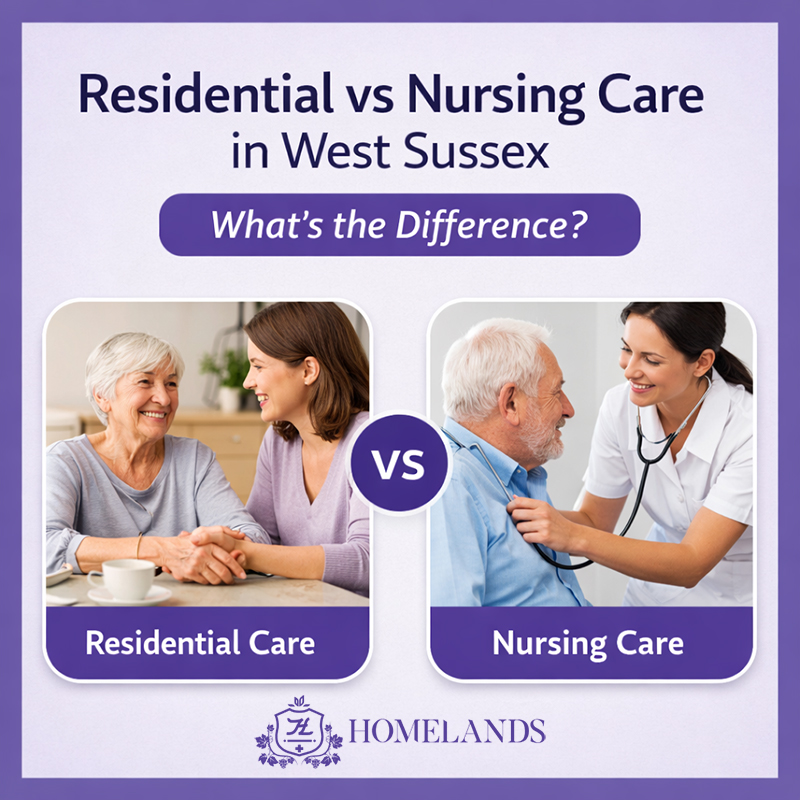
A care home with nursing West Sussex provides everything residential care offers — plus 24-hour support from qualified nurses. This means there is always a trained professional on duty to manage medical conditions and respond quickly to changes in health.
. Have long-term health conditions such as Parkinson’s or diabetes
. Require regular medication management
. Need wound care, injections, or clinical monitoring
. Have mobility issues or complex care needs
A CQC registered care home West Sussex like Homelands Nursing Home ensures that all nursing services meet strict quality and safety standards.
Families often seek 24 hour nursing care West Sussex when they want reassurance that their loved one’s medical needs are consistently and professionally managed.
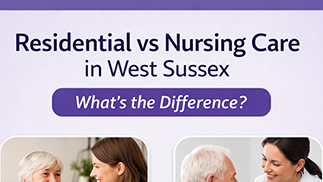
When comparing residential vs nursing care, the distinction comes down to the level of medical support required.
Level of Care
. Residential: Personal care and daily support
. Nursing: Personal care plus medical care from registered nurses
Staffing
. Residential: Care assistants and support staff
. Nursing: Includes qualified nurses available 24/7
Health Needs
. Residential: Suitable for low to moderate needs
. Nursing: Designed for complex or ongoing medical conditions
Cost
. Residential: Generally lower
. Nursing: Higher due to clinical care
. (This reflects typical residential care vs nursing care cost UK differences)
Regulation
Both are regulated, but nursing homes must meet additional clinical standards
Choosing between these care home types in West Sussex depends on current needs — and sometimes future ones too.
The answer often lies in observing daily challenges and changes in health.
Signs Residential Care May Be Suitable
. Struggling with cooking, cleaning, or personal care
. Feeling isolated or lonely
. Needing a safer living environment
Signs Nursing Care May Be Needed
. Frequent hospital visits
. Complex medication routines
. Chronic illness requiring monitoring
. Reduced mobility or risk of falls
. Cognitive decline alongside physical health needs
If you’re wondering when does someone need nursing care instead of residential care, it’s usually when medical oversight becomes essential rather than occasional.
Professionals can help guide this decision. A GP, social worker, or care assessor can evaluate your loved one’s needs and recommend the appropriate level of care.
Families often ask, what level of care do I need residential or nursing? The most reassuring step is to seek a formal assessment, ensuring nothing is overlooked.
Yes — and this can make a significant difference to long-term comfort and stability.
Many families ask, can a care home provide both residential and nursing care? The answer is yes, and homes like Homelands Nursing Home are designed to do exactly that.
This flexibility means:
. Residents can stay in familiar surroundings
. Care can increase gradually as needs change
. Families avoid the stress of relocation
The transition from lower to higher care — often called moving from residential to nursing care — becomes seamless, preserving relationships and routines.
Understanding funding is often a major concern, especially when comparing residential care vs nursing care cost UK.
1. Self-Funding
Many families pay privately, especially if assets exceed the threshold set by local authorities.
2. Local Authority Support
West Sussex County Council may contribute to costs after a financial assessment.
3. NHS Support
Some individuals qualify for:
. NHS funded nursing care West Sussex (a contribution towards nursing costs)
. NHS Continuing Healthcare (full funding in specific cases)
Funding can feel complex, so it’s always wise to seek professional advice early. Care providers like Homelands Nursing Home can often guide families through initial steps.
What is the difference between a residential and nursing care home?
A residential care home provides help with daily living, while a nursing care home includes 24-hour medical care from qualified nurses. The main difference lies in the level of healthcare support available.
How do I know if my parent needs nursing care?
If your parent has ongoing medical conditions, requires frequent monitoring, or struggles with complex medication, nursing care may be more appropriate. A professional assessment can confirm this.
Is Homelands Nursing Home in West Sussex CQC registered?
Yes, Homelands Nursing Home is a CQC registered care home West Sussex, ensuring high standards of safety, care, and professionalism.
Can I move from residential care to nursing care without changing homes?
In homes that offer both services, such as Homelands Nursing Home, residents can transition smoothly without relocating, making the process far less disruptive.
At Homelands Nursing Home, we understand the emotional weight behind every choice and are here to support you with clarity and compassion.
Whether you’re exploring early options or need immediate guidance, our team can help you understand what feels right for your family. Many consider Homelands among the best nursing home in West Sussex for elderly, thanks to its warm environment and flexible care options.
Take the next step by visiting our Care Services page or speaking directly with our team — reassurance is closer than you think.

View feedback from each of our care homes.
We take pride in the kind words and positive reviews we receive from our residential
care homes in Surrey and West Sussex. Your trust and appreciation serve as powerful
reminders of why we do what we do.

We look forward to hearing from you.